Storing Dried Herbs So They explained: what it is, how to pick it, and what actually matters when you use it.
Most dried herbs do not go off. They go quiet — slowly, invisibly, and long before the best-before date on the bag. Four conditions decide how fast, and the fridge is not one of them.
The four enemies
- Light — breaks down the pigments and accelerates the oxidation of volatile oils. A herb in a clear jar on a sunny counter is losing aroma all day.
- Air — oxygen plus time equals flat. Every time you open the bag you exchange the headspace.
- Heat — above about 25 °C the aromatics start to migrate out of the plant matter. A cupboard above the stove is the worst place in the kitchen.
- Moisture — the only one that is a genuine safety issue. Damp herbs grow mould, and mould in a dried root is not always visible.
What actually works
A glass jar with a rubber seal, filled as full as practical, stored in a dark cupboard away from the stove. Full matters: less headspace means less oxygen and less room for aromatics to escape into. If you have half a jar, transfer to a smaller jar rather than leaving it half empty.
Labels matter more than people think. A jar of pale slices looks like four other jars of pale slices. Write the herb, the harvest date, and the date you opened it — because the second date, not the first, is the one that predicts how it tastes now.
What not to do
- Do not refrigerate anything you open weekly. Every time the jar comes out, condensation forms on the cold surface and goes back in with it. Fridge storage is for long-term, unopened stock only.
- Do not freeze dried herbs as a default. Freezing is fine for a bulk bag you will portion once, and bad for a jar you open twice a week.
- Do not store in the bag it came in, if the bag is paper or thin film. It is designed for shipping, not for six months.
- Do not keep herbs next to spices in an open shelf. Dried herbs take on the smell of their neighbours, and a rose that smells of cumin is a rose you will throw away.
How long, realistically
These are the points at which the herb stops doing its job, not food-safety limits:
- Whole roots and bark — 24 months.
- Sliced roots — 12 to 15 months.
- Berries and fruit — 12 months, and they dry out rather than spoil.
- Peel — 18 months and improving, if kept properly dry; see the chen pi notes.
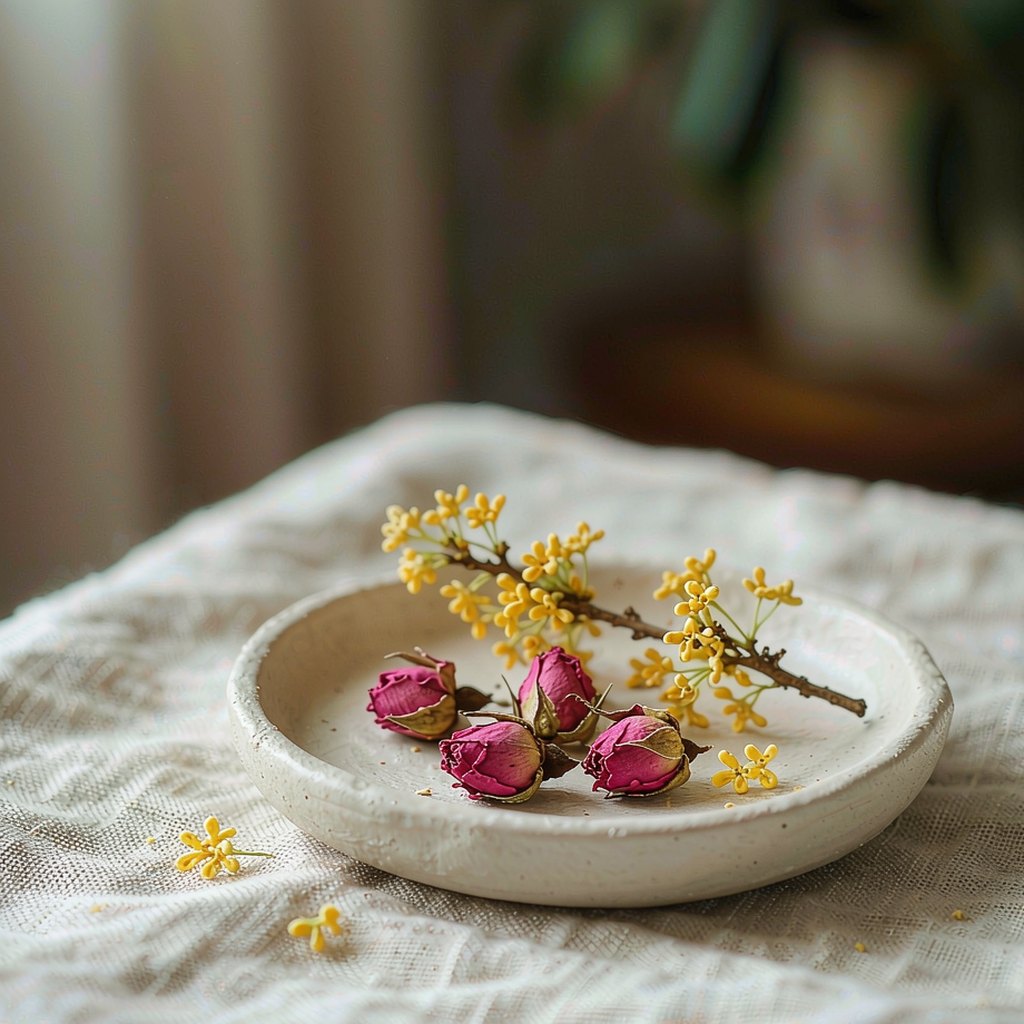
- Flowers — 10 to 12 months. Rose and honeysuckle are the fastest to fade.
- Powder — 4 to 6 months. Grind small, grind often.
The smell test
Once a season, open every jar and smell it from arm’s length. A herb that still has something to say will announce itself without help. One you have to put your nose into is finished, whatever the date says. Do not throw it out in a panic — put it in a stock pot, where a faded root still contributes body even after its aroma has gone.
Dried herbs are not preserved food. They are fresh food on a very slow clock.
If you find mould. Grey fuzz, a musty smell, or dark patches in the crease of a fruit mean the whole jar, not just the visible piece. Mould filaments run through dried plant matter long before they fruit. Bin it — the cost of replacing 200 g is less than the cost of being wrong.