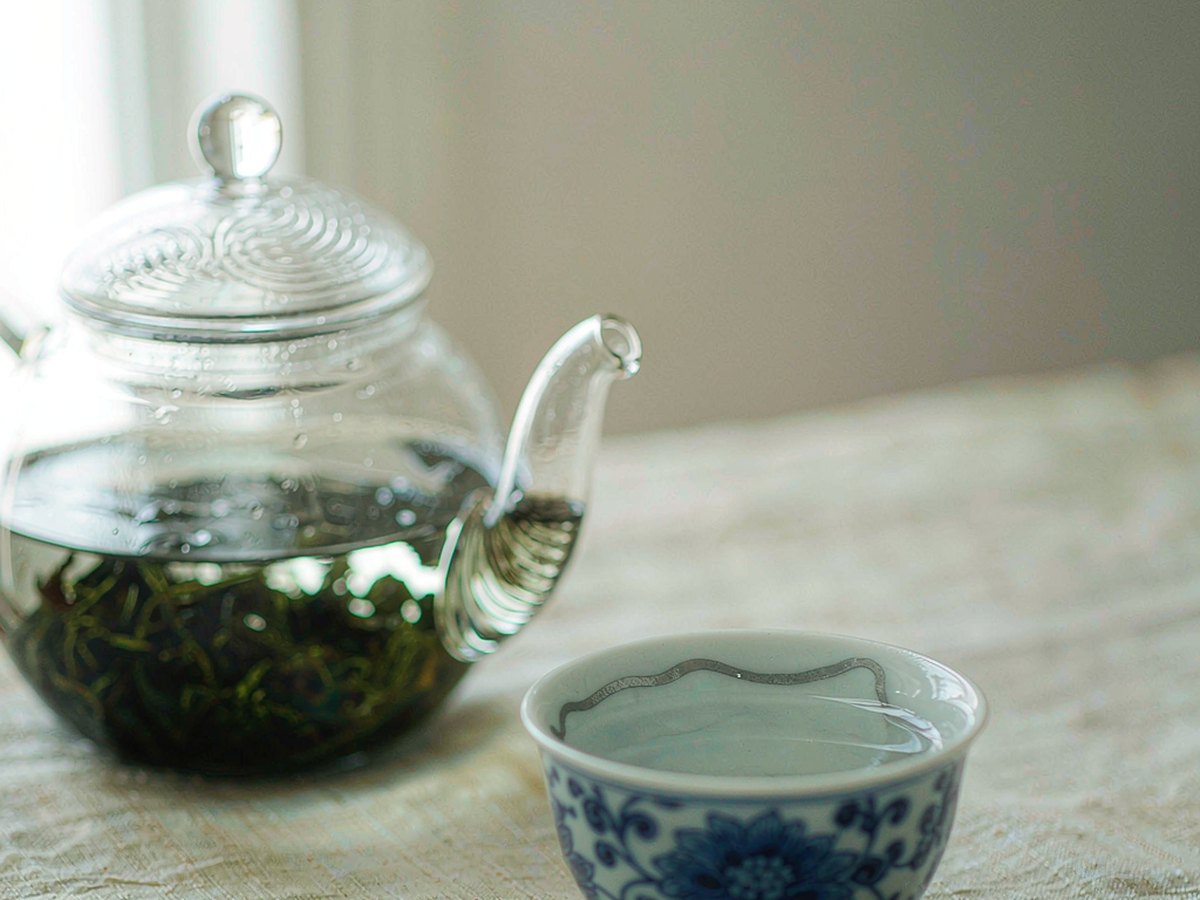
The gongfu cup is the most misunderstood object in tea, because it looks like a small teacup and it is actually a measuring instrument. Its size, its wall thickness, its lip and its foot are all doing specific work during a brew, and if you understand what that work is, the reason to drink tea this way stops being pretentious and starts being obvious.
- What it is
- A small, often handleless cup used for gongfu brewing, typically 60–80 ml, made from porcelain or stoneware.
- Material
- Porcelain for white and light teas, where the cup should not interfere with colour; stoneware for oolong and pu-erh, where heat retention matters.
- Why the size matters
- A small cup means a small pour, which means a short steep, which means the tea is not over-extracted. The cup is the reason the method works.
- Why the shape matters
- A slightly flared lip concentrates the aroma; a thin wall lets you smell the liquor; a small foot keeps it warm without burning your hand.
- The glaze
- A reactive glaze on a decorative piece is a visual and tactile pleasure, and it does not change how the tea tastes — the material under it does that.
- Care
- Hand wash, no dishwasher, and let it dry fully before storing, especially in the joint between foot and body.
What the small size is actually for
A gongfu brew works on a principle that Western teabag brewing cannot use: instead of extracting everything at once and then stopping, you extract a little, pour it off, and extract a little more from the same leaves. The cup is the measuring device that makes this possible.
With a 60 ml cup, a pot of about 100 ml holds roughly 10 g of leaf. The ratio of leaf to water is high — about 1:10 — and the steeps are short, typically ten to thirty seconds. Each round pulls out a fraction of what is in the leaf, so the first cup is bright and delicate and the fifth is deeper and rounder. The cup is small because a small pour means the liquid stays in the pot long enough to be poured off completely. If the cup were large, you would pour a third of the pot and leave the rest to over-extract.
This is the whole difference. A Western brew aims to get the right strength in one step, which means either under-extracting in a short steep or over-extracting in a long one. A gongfu brew aims to get the whole range of the tea across several cups, which is a different and more interesting goal.
Shape, and the four jobs it does
The flared lip is the first thing worth noticing. A cup with a slight outward flare at the rim gathers the aroma as you drink and delivers the liquid to the front of the tongue, where the sweetness registers most clearly. A straight-sided tumbler sends the same liquid to the middle of the tongue, where the bitterness sits.
The wall thickness is the second. A thin-walled porcelain cup is a heat-insulator in the sense that it lets you hold a hot liquid without burning your fingers, and it also transmits aroma — the scent of the tea reaches your nose as you drink, which is a substantial part of what you taste. A thick stoneware cup keeps the tea hotter for longer, which matters when you are brewing a heavily oxidised oolong and want each round to arrive at drinking temperature.
The foot is the third, and it is the one that most people never think about. A small raised foot allows the cup to sit on a wet surface without forming a seal, so it does not stick and does not trap moisture in the join. It also allows heat to circulate under the cup, and it keeps the base from being trapped against the tray.
The volume is the fourth, and it is the one that has to be right. Too small and a normal pour overflows and you cannot taste the difference between rounds, because the cup is full every time. Too large and the pot needs more water, which changes the leaf-to-water ratio, which changes everything else. Sixty to eighty millilitres is the standard for a single cup, and if your cups are 40 ml you will want to pour half a cup at a time and adjust.
Porcelain or stoneware, and what it does to the taste
The material of the cup is not a style preference — it changes what you perceive in the liquor, and the choice follows the tea.
Porcelain is white, non-porous and does not hold heat. It is the right choice for white tea, green tea, jasmine, oolong and anything light or aromatic, because the brightness and the floral top notes are what you are trying to taste, and a thin white porcelain wall gives you a clean, bright, colour-true cup. It is also the right choice when you want to see the colour of the liquor, which is a real part of evaluating a tea.
Stoneware is heavier, warmer and slightly porous. It is the right choice for pu-erh, heavily roasted oolong and dark teas, where you want the liquor to stay hot through the session and where a warmer cup softens the tannic edge. It also develops a seasoning over years that many drinkers insist improves the tea.
The decorative glaze on a piece like the blue dragon cup is a separate matter entirely. A reactive glaze is a visual and tactile pleasure, and it does not alter how the tea tastes — the clay body and the firing do that. Enjoy the glaze for what it is, and do not expect it to be an improvement over plain white porcelain for a delicate tea.
How to use one, and how to look after it
The working sequence is simple: warm the pot and the cups with a fast rinse of hot water and pour that away; put the leaf in and smell it dry before brewing, which is the moment the aroma is strongest; add water just off the boil; steep for the shortest time you dare; pour every drop; and then rinse the cup between rounds so the previous round does not linger in the glaze.
Pouring every drop matters more than it sounds. Tea that is left behind in the pot continues to extract, so the next round is stronger than the one you planned, and by the fifth round the pot is effectively a concentration of the first. A small pot, a small cup and a complete pour are what keep the session even.
For care: hand wash with warm water, and do not put a decorated reactive-glaze piece in the dishwasher, because the detergent and the heat will dull the surface and can affect metallic lustre. Dry it fully before putting it away, and pay particular attention to the junction between the foot and the body, where a little water trapped in the join can cause a line of mould or a permanent stain. Store the cups somewhere they cannot knock against each other — porcelain chips, and a chip on the lip of a 60 ml cup is the end of that cup’s usefulness.
What it is used for
- Controlling strength by the pour The functional purpose of a small cup: a small pour means you can empty the pot completely, which keeps each round even and stops the later rounds turning harsh.
- Concentrating aroma A thin-walled, flared cup delivers the aroma to the nose as you drink and to the front of the tongue, which is where the sweetness and the top notes register most clearly.
- Judging colour A white porcelain cup makes the colour of the liquor visible, which is the single most reliable way to judge whether a brew is right or overdone.
- Temperature control Stoneware retains heat and keeps a heavily oxidised oolong at drinking temperature through a long session, while porcelain lets a delicate white tea stay at the temperature it should be drunk at.
- Building a repeatable method A fixed cup size means a fixed leaf-to-water ratio, which is how a gongfu session becomes a repeatable practice rather than a guess.
- The pleasure of the object A handleless, well-thrown cup is a good object to hold, and that is a legitimate reason in its own right.
In the kitchen
- The standard setup 100 ml pot, 60–80 ml cups, 8–10 g of leaf, water just off the boil, and six to eight rounds of increasing steep time.
- Warm everything first A quick rinse of the pot and cups with hot water, poured away. It is the single step that most improves the temperature of the first cup.
- Smell the dry leaf Before pouring any water, put the leaf in the warm pot, close the lid and inhale. This is the most concentrated aroma the tea will ever produce.
- Pour every drop Empty the pot completely between rounds. What is left behind keeps extracting and unbalances the session.
- Rinse between rounds A quick rinse of the cup before the next pour keeps the previous round from pooling in the glaze and flattening the next aroma.
- For a single tea at home A small pot, two cups, and one tea. You need very little equipment — a pot, a strainer and two cups cover the whole method.
There is no health caution attached to a teacup, but there are two practical ones. Hot water and porcelain do not mix well: a chipped or cracked cup can fail under a thermal shock from boiling water, so check for chips and cracks and retire any cup that has one. And a reactive glaze is not a food-safe surface for prolonged contact with acid liquids, which matters if you brew a very acidic tea in a decorated piece repeatedly.
O
n
e
m
o
r
e
p
r
a
c
t
i
c
a
l
n
o
t
e
:
i
f
y
o
u
a
r
e
b
u
y
i
n
g
y
o
u
r
f
i
r
s
t
g
o
n
g
f
u
s
e
t
u
p
,
s
p
e
n
d
t
h
e
m
o
n
e
y
o
n
t
h
e
p
o
t
a
n
d
t
h
e
s
t
r
a
i
n
e
r
r
a
t
h
e
r
t
h
a
n
o
n
t
h
e
c
u
p
s
,
b
e
c
a
u
s
e
a
g
o
o
d
p
o
t
w
i
t
h
a
p
o
o
r
s
t
r
a
i
n
e
r
w
i
l
l
f
r
u
s
t
r
a
t
e
y
o
u
d
a
i
l
y
,
a
n
d
a
p
o
o
r
p
o
t
w
i
t
h
g
o
o
d
c
u
p
s
w
i
l
l
s
i
m
p
l
y
m
a
k
e
g
o
o
d
t
e
a
m
o
r
e
s
l
o
w
l
y
.
A
n
d
i
f
y
o
u
a
r
e
n
e
a
r
h
a
r
d
w
a
t
e
r
,
n
o
t
e
t
h
a
t
i
t
w
i
l
l
m
a
k
e
a
d
e
l
i
c
a
t
e
t
e
a
t
a
s
t
e
f
l
a
t
n
o
m
a
t
t
e
r
h
o
w
g
o
o
d
t
h
e
c
u
p
i
s
.
Disclaimer
This article is about a piece of teaware and how to use it, and it makes no claims about tea as a treatment for any condition. Nothing here is health advice, and any discussion of health in the linked articles is general information about traditional use rather than evidence of efficacy. If you are pregnant or nursing, take medication, manage a chronic condition, or are giving tea to a child, talk to your doctor.