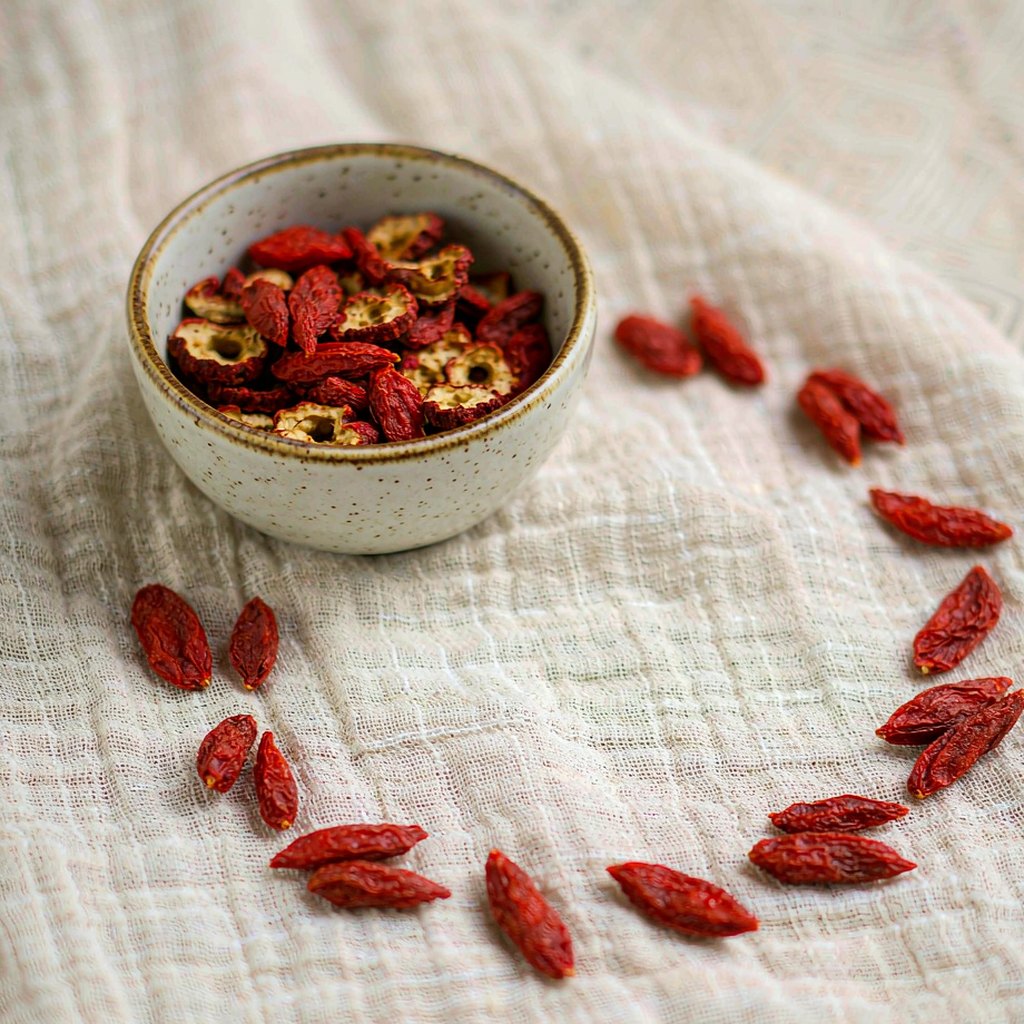
Goji Berries explained: what it is, how to pick it, and what actually matters when you use it.
Bright red, uniformly sized, slightly damp and clumped in the bag — most goji on the market is all three. None of those are features. They are the fingerprint of a cheap lot, treated to look expensive.
- Botanical
- Lycium barbarum. The related L. chinense is smaller and tarter.
- Part used
- Ripe fruit, dried whole.
- Origin
- Zhongning, Ningxia — the reference origin. Also Gansu, Qinghai, Xinjiang.
- Flavour
- Sweet, faintly of tomato and raisin, thin bitter skin, gritty seeds.
- Use
- 10–15 g per cup, or a small handful per person in soup.
- Keeps
- 12 months sealed in the dark. They dry out before they go off.
Colour is the worst way to judge
A naturally dried goji is a dull brick red, matte, and uneven from berry to berry — some darker, some almost orange. That is a sun-dried crop. A bag of glossy, uniform, scarlet berries has been treated, most often with sulphur, historically with dye. Rub a few against a damp paper towel: if colour comes off, walk away. If the bag inside is stained red, walk away faster.
Size is not quality
Goji is graded by count per 50 g — 180, 220, 280, 380 and so on. Larger berries cost more and rehydrate more impressively in photographs. The small Ningxia berries, 380 grade, are usually sweeter and thinner-skinned, and they are what most Chinese households actually cook with. Buy by taste, not by diameter.
Texture tells you how it was stored
Berries should be separate and slightly dry to the touch, not sticky. A clump in one corner of the bag means moisture, and moisture in a dried fruit means mould in the seam you cannot see. Shake the bag: it should rattle faintly. If it thuds, it has taken on water.
How to use them
- Rinse for five seconds. Not to clean them — to take off the surface dust and any syrup from the packing line.
- Soak ten minutes in warm water if you want them plump for a cold dish or a dessert. Skip the soak for tea.
- Add late. Goji goes sour and soft if boiled for long. Five minutes at the end of a soup, or straight into the cup.
- Chew one raw before you cook with the bag. Sweet first, then a slightly bitter skin, then seeds. If it tastes only of sugar, the lot was soaked in syrup to add weight.
What they are actually for in a pot
In Chinese home cooking goji is used as a sweetener and a colour, not as a vegetable. Eight or ten berries will sweeten a chicken soup for four and tint it amber. In a cup, they pair with chrysanthemum, red date, and longan, and they are the reason a plain infusion stops tasting thin.
Interaction worth knowing. Goji has a documented interaction with warfarin and is not recommended alongside anticoagulants. If you take one, ask your clinician before making it a daily habit. This is kitchen information, not medical advice.