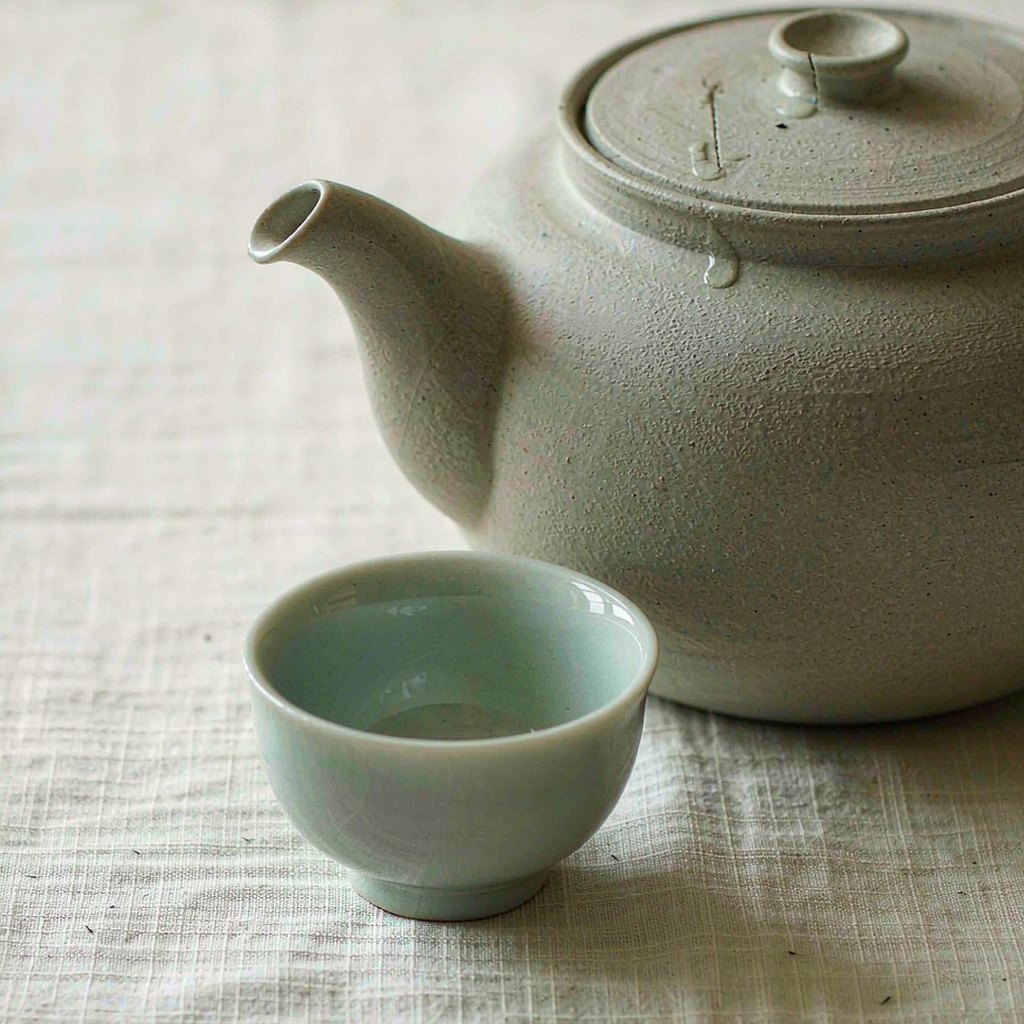
A decoction is the base technique behind most of Chinese herb cookery: a covered pot, gentle heat, and a timing rule that depends entirely on what is in the pot. It takes twenty minutes and four decisions.
The shape of it
Herb, water, heat, time, strain. That is the whole method. Everything that follows is about getting the proportions and the heat right, because a decoction made with too much water and a hard boil is just herb-flavoured water, and one made with too little water and no lid is a burnt pan.
Proportions
- A single cup — 3 to 5 g of dried herb to 250 ml of water. Roots and barks at the top of that range, flowers and leaves at the bottom.
- A day’s batch — 15 to 20 g to 1 litre. Strain and keep in the fridge for up to three days.
- A pot for four — 30 to 40 g to 2 litres, in a heavy lidded pot.
More herb is not better. Past a certain concentration the extraction stalls and you are simply pouring money into a strainer.
Heat, and the lid
Bring to a boil, then drop to the lowest heat that keeps a bare simmer — small bubbles at the edge, no rolling motion. A hard boil drives off exactly the aromatic compounds you are trying to infuse, and it does it in the first five minutes. The lid is not optional: it recirculates what would otherwise leave the pot.
For flowers and leaves, do not boil at all. Ninety degrees, covered, off the heat, is enough. Boiling chrysanthemum or honeysuckle for ten minutes produces a bitter, brown, hay-like liquid that has none of the aroma the flower was bought for.
Time, by what is in the pot
- Flowers, leaves, petals — 2 to 4 minutes at 90 °C.
- Berries, peel, sliced roots — 15 to 25 minutes at a bare simmer.
- Whole woody roots, bark — 45 to 90 minutes.
- Seeds and hard fruit — 20 to 30 minutes, cracked first.
When you are mixing categories — a pot with astragalus and chrysanthemum, for example — cook the roots first, then take the pot off the heat and add the flowers for the last three minutes. Adding flowers at the start is the single most common mistake in this whole area.
Straining, and the second run
Pour through a fine mesh strainer, pressing the solids with the back of a spoon. Most herbs will give a respectable second decoction from the same solids — add fresh water, simmer for half the original time, and combine the two liquids. The second run is lighter and thinner, which is why combining is better than drinking them separately.
The four ways it goes wrong
- Hard boil. Aroma gone, bitterness up. Fix: lower the heat, and use a lid next time.
- Too much water. Thin, sweet, forgettable. Fix: reduce after straining rather than adding more herb.
- Flowers in from the start. Bitter and brown. Fix: roots first, flowers last, heat off.
- Metal that reacts. Aluminium and unlined iron will discolour a decoction and add a metallic note. Fix: glass, ceramic, enamelled steel, or stainless.
On storage. A decoction keeps three days in a sealed jar in the fridge and about eight hours at room temperature before it starts to sour. It does not freeze well — the aromatics separate and do not come back.