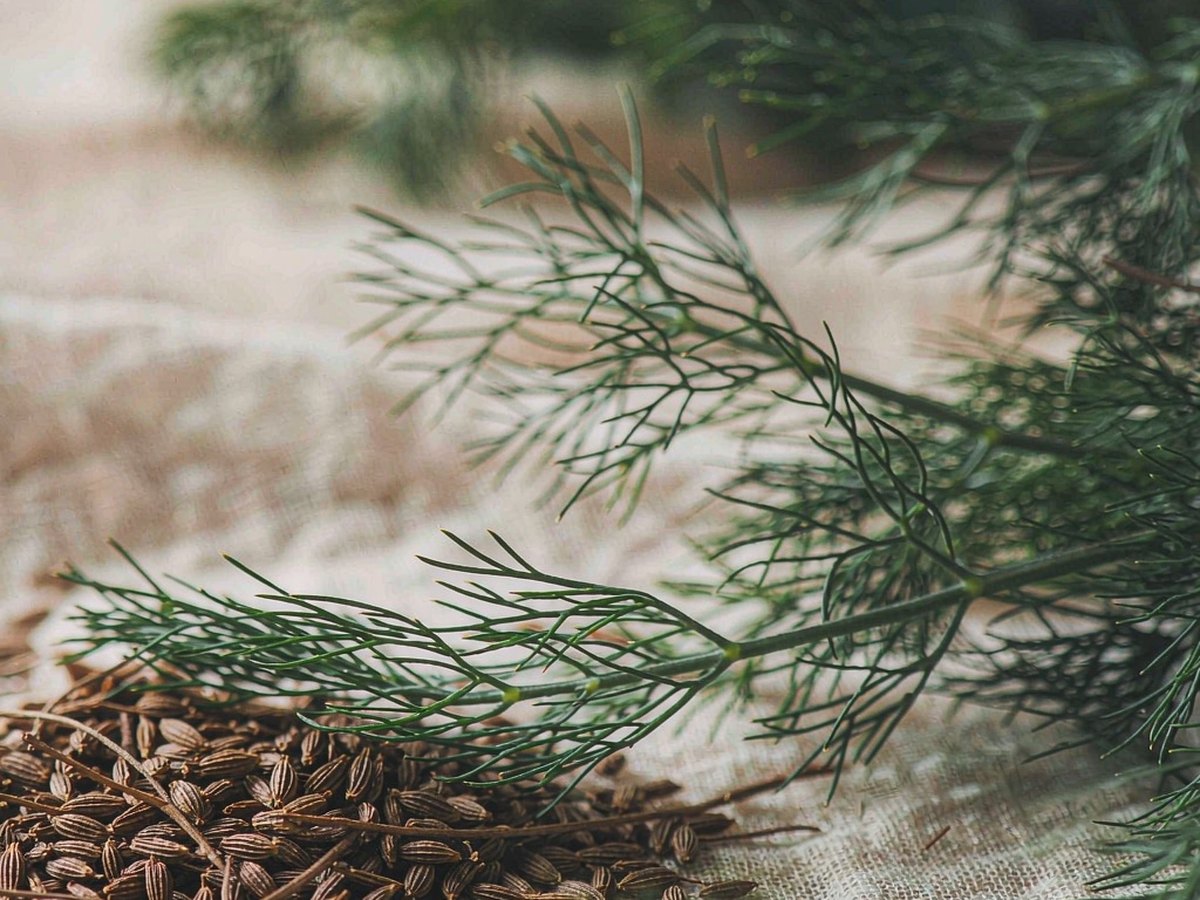
Fennel seed is the only common spice that is genuinely sweet and genuinely good for digestion at the same time. It has been used after meals across three continents for a couple of thousand years, it is the backbone of Italian sausages and Indian spice blends, and it is very often sold adulterated with caraway, which is half the size, twice as bitter and a completely different plant.
- Botanical
- Foeniculum vulgare — the same species as the Florence fennel bulb and the bronze fennel fronds. Caraway, Carum carvi, is a different genus and is the usual adulterant.
- Part used
- The dried fruit (commonly called a seed), ridged and greenish to tan. Ground or whole.
- Origin
- Egypt and the Mediterranean basin traditionally; also India, where fennel seed is a staple of the digestive spice blends.
- Flavour
- Sweet, anise-like and slightly cooling, with a green, grassy note underneath the anise.
- Use
- 1–2 teaspoons whole or ground per pot, or 3–5 seeds for a single cup. Fennel loves to be crushed just before use.
- Keeps
- 2 years whole; ground fennel goes dull within 6 months because its anethole lives on the surface.
Fennel or caraway
The two are unrelated, and they are easy to tell apart with a magnifier or even with the naked eye once you know what to look for. Fennel seeds are larger, plumper, more curved, and greenish to pale tan, with straight ribs running the length of the seed. Caraway seeds are smaller, darker, more sharply crescent-shaped, and much narrower.
The flavour difference is bigger than the size difference. Fennel is sweet and rounds out a dish; caraway is bitter, earthy and aggressive, with a hint of pepper. If a “fennel” bag tastes like a rye cracker, it is caraway, and no amount of brewing will fix it.
Other things that turn up in fennel bags: the husks of a different fennel variety, or the small brown chaff that falls out of a bulk lot. Neither is dangerous, but the chaff is dirt and the husks are dust.
Where it sits in the kitchen
Fennel is the backbone of the classic Italian sausage seasoning — pork, fennel seed, red wine, garlic — and it is in the German sausage family too, where caraway is the more common choice. It shows up in Indian and Pakistani spice blends as Jeera Saunf, a mix of cumin and fennel that is fried whole and ground into masalas.
In sweet baking, fennel seed appears in everything from Italian biscotti to the British seed loaf to Sicilian breads. The classic combination is fennel and orange, and it is worth knowing that fennel seed is one of the few spices that genuinely improves with a little heat — a warm pan for thirty seconds makes it rounder and brings up its sweetness.
Digestion and the kitchen tradition
The digestive reputation of fennel is old and consistent across traditions: Greek physicians used it for colic, Indian Ayurvedic practice uses it for digestion and for the heaviness after meals, and the post-meal digestive teas of southern Europe have used fennel for centuries.
The aroma comes from anethole, a compound chemically similar to the anise in licorice and aniseed — which is why fennel tea tastes so much like the licorice-root teas many people know as “digestive tea”. If you dislike the taste of licorice, you will probably dislike fennel tea too.
What it is used for
- Digestion The best-known traditional use: easing gas, bloating and fullness after a meal, and easing intestinal cramping.
- Colic and cramping Traditionally used for intestinal spasms and cramping, and it appears in many European digestive blends for exactly this.
- Sweetness without sugar Because fennel tastes sweet, it can carry a sweet note in a tea blend or a stew without contributing sugar — useful in savoury cooking.
- Breast comfort Fennel seed is traditionally taken as a galactagogue and for breast fullness. This is a long-standing folk and traditional use with no established clinical dosing.
- Expectorant Traditionally used to loosen and clear phlegm, and as a warming aromatic for coughs.
- Antimicrobial The essential oil shows antibacterial activity in laboratory studies, and fennel seed was historically used as a preservative.
In the kitchen
- After-dinner tea A teaspoon of crushed seed in a cup of hot water, covered for ten minutes. Taken after a heavy meal in most of southern Europe.
- Italian sausage Crushed fennel seed with garlic, red pepper and salt in a pork and red wine luganica.
- Roasted vegetables Fennel seed, olive oil and salt over roast carrots, potatoes or celeriac.
- Masala and chaat masala Fry whole cumin and fennel seed until they darken, then grind with the rest of the blend.
- Breads and flatbreads Fennel and anise seed in a seeded loaf, or the Sicilian “pup cu muffa” style breads.
- Fish curry Fennel seed in the masala for coastal Indian fish curries, where it pairs with coconut and tamarind.
Fennel is safe as a food and gentle as a tea, but it is not neutral: in large amounts it can upset the stomach rather than settle it, and its cooling, sweet character can aggravate conditions that traditional medicine associates with cold and damp.
F
e
n
n
e
l
i
n
t
e
r
a
c
t
s
w
i
t
h
s
o
m
e
m
e
d
i
c
a
t
i
o
n
,
i
n
c
l
u
d
i
n
g
c
e
r
t
a
i
n
d
i
a
b
e
t
e
s
d
r
u
g
s
a
n
d
o
e
s
t
r
o
g
e
n
–
b
a
s
e
d
t
r
e
a
t
m
e
n
t
s
,
a
n
d
i
t
m
a
y
b
e
u
n
s
u
i
t
a
b
l
e
d
u
r
i
n
g
p
r
e
g
n
a
n
c
y
i
n
c
o
n
c
e
n
t
r
a
t
e
d
d
o
s
e
s
.
I
f
y
o
u
a
r
e
p
r
e
g
n
a
n
t
,
n
u
r
s
i
n
g
,
o
r
o
n
m
e
d
i
c
a
t
i
o
n
,
c
h
e
c
k
w
i
t
h
a
c
l
i
n
i
c
i
a
n
b
e
f
o
r
e
m
a
k
i
n
g
i
t
a
d
a
i
l
y
d
r
i
n
k
.
Disclaimer
This is a description of a kitchen spice and its long history of traditional use. Fennel seed is not a treatment for any digestive condition, and it should never be used in place of prescribed medication. If digestive symptoms persist or are severe, see a doctor rather than a teapot.