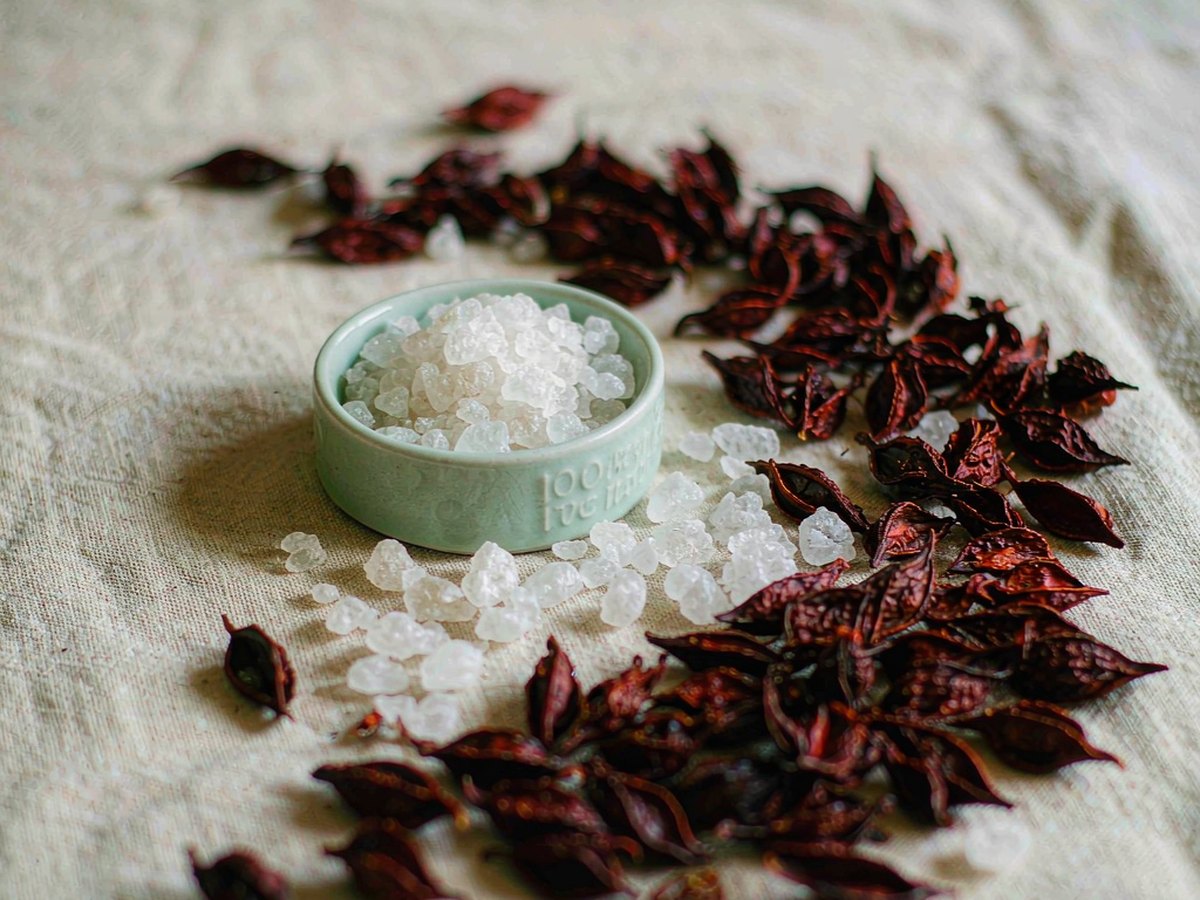
Sichuan Peppercorn explained: what it is, how to pick it, and what actually matters when you use it.
Sichuan pepper does not make your mouth hot. It makes your mouth buzz, flutter and vibrate, in a way that is completely unlike chili heat and completely unlike menthol. The sensation comes from a compound that acts on a different set of receptors, and it is the reason a Sichuan kitchen is built around a spice most western cooks have never met.
- Botanical
- Zanthoxylum — several species, most importantly Zanthoxylum bungeanum (green/green Sichuan pepper) and Z. chinense (red, or “hua jiao”, the one used for mala).
- Part used
- The dried husk of the fruit, with the seed usually shaken out. Green pepper is harvested earlier and has a fuller, more citrus aroma; red is riper and sharper.
- Origin
- Sichuan, Chongqing, Guizhou and Yunnan. Sichuan is the reference growing region.
- Flavour
- Citrusy, floral and woody, with the buzzing numbness arriving a second or two after the aroma.
- Use
- A tablespoon of toasted ground husks for a kilogram of meat, or 2–3 g per 200 ml in a broth. Toast in a dry pan until fragrant before grinding.
- Keeps
- 2 years whole; ground 6–12 months, and the aroma fades faster than the numbness.
A different kind of heat
Chili heat activates TRPV1 receptors, which respond to capsaicin and to actual temperature — which is why very hot tea feels hotter than warm tea. Sichuan pepper’s hydroxy-alpha-sanshool instead activates a family of channels that respond to mechanical vibration and touch, including the two-petal Sonic hedgehog signalling pathway involved in touch and pressure perception.
The practical result is that Sichuan pepper produces a vibration sensation with almost no thermal component. You can eat a dish with a great deal of Sichuan pepper and no chili at all and feel none of the burning, but you will feel the buzzing, and it will make your lips feel slightly swollen and your saliva flow.
Red and green, and why the distinction matters
Red Sichuan pepper (hua jiao, 红色的花椒) is harvested when the fruit ripens and turns red, and it is the classic mala ingredient: sharper, more numbing, less citrus. Green Sichuan pepper (qing hua jiao, 青花椒) is picked earlier, is much more lemony and bright, and its aroma is the entire reason modern Chinese restaurants have started putting green pepper oil on everything.
Neither is a chilli substitute and neither is a salt substitute, although the mixture of ground red pepper with salt — “pepper salt” — is one of the great compound seasonings of Sichuan cooking and is used as a dip for boiled chicken and for many other dishes.
Handling it well
Toasting matters more here than with almost any other spice. Thirty to forty-five seconds in a dry pan, until the husks darken slightly and the aroma comes up, deepens the citrus note considerably. Grind them warm, before they cool, and only grind what you need — the volatile oils are the whole point.
The seeds are usually removed because they are bitter and add no aroma, and removing them also removes most of the residual heat. A bag of husks with a lot of black seed left in it is a sign of a cheap sieve, and the bitterness will show up in the dish.
What it is used for
- The mala effect The defining use: a tingling, vibrating numbness that is the counterpoint to chilli heat. It is a sensory effect on touch receptors, not tissue damage.
- Digestion Traditionally used as a stomachic and carminative, and it is the spice most often used to stimulate the appetite in Chinese practice.
- Circulation and warmth A warming aromatic in Chinese medicine, used to dispel cold and move qi, and to warm the middle.
- Antimicrobial The essential oil shows antibacterial and antifungal activity in laboratory testing, and it has been studied as a food preservative.
- Numbing and pain Traditional topical application of the numbing quality to minor pain and to itching, a long-standing folk use of the powder on the skin.
- Aroma The bright citrus-and-floral note is what green pepper oil has made fashionable in restaurants from Chengdu to Copenhagen.
In the kitchen
- Mala sauce and dry pot Toasted ground husks into the chilli oil at the end of cooking so the aroma stays volatile and the numbness builds in the mouth.
- Sichuan pepper salt Two parts fine salt to one part toasted ground husk. The classic dip for boiled chicken and a good seasoning for fried potatoes and green beans.
- Green pepper oil Green husks infused in warm oil and strained out. A spoonful over any noodle dish or dumplings.
- Chilli oil Husks bloomed in oil with the chilli flakes, which is how the numbing gets into the bottled oil in the first place.
- Tea and broths A few green husks in a light chicken broth or a pot of jasmine tea for a bright, aromatic lift that has nothing to do with heat.
Sichuan pepper is well tolerated as a food but the numbing sensation is strong and can be alarming if you are not expecting it. Anyone with a numb or tingling condition — neuropathy, some blood-pressure medications, recent dental work — should be cautious with concentrated amounts.
S
o
m
e
p
e
o
p
l
e
e
x
p
e
r
i
e
n
c
e
a
s
t
r
o
n
g
e
r
r
e
a
c
t
i
o
n
t
o
s
a
n
s
h
o
o
l
t
h
a
n
t
o
c
a
p
s
a
i
c
i
n
,
a
n
d
a
s
m
a
l
l
n
u
m
b
e
r
o
f
u
s
e
r
s
r
e
p
o
r
t
a
n
u
n
p
l
e
a
s
a
n
t
s
e
n
s
a
t
i
o
n
l
a
s
t
i
n
g
l
o
n
g
e
r
t
h
a
n
e
x
p
e
c
t
e
d
a
f
t
e
r
a
h
e
a
v
y
d
o
s
e
.
S
t
a
r
t
w
i
t
h
a
s
m
a
l
l
p
i
n
c
h
r
a
t
h
e
r
t
h
a
n
a
t
a
b
l
e
s
p
o
o
n
.
Disclaimer
The numbing sensation from Sichuan pepper is a genuine effect on nerve signalling, not an injury, but it is not a treatment for pain and it does not numb the mouth before you burn it the way capsaicin does. Do not use it to mask the heat of very spicy food, and check with a clinician before using it regularly if you have a sensory or circulatory condition.