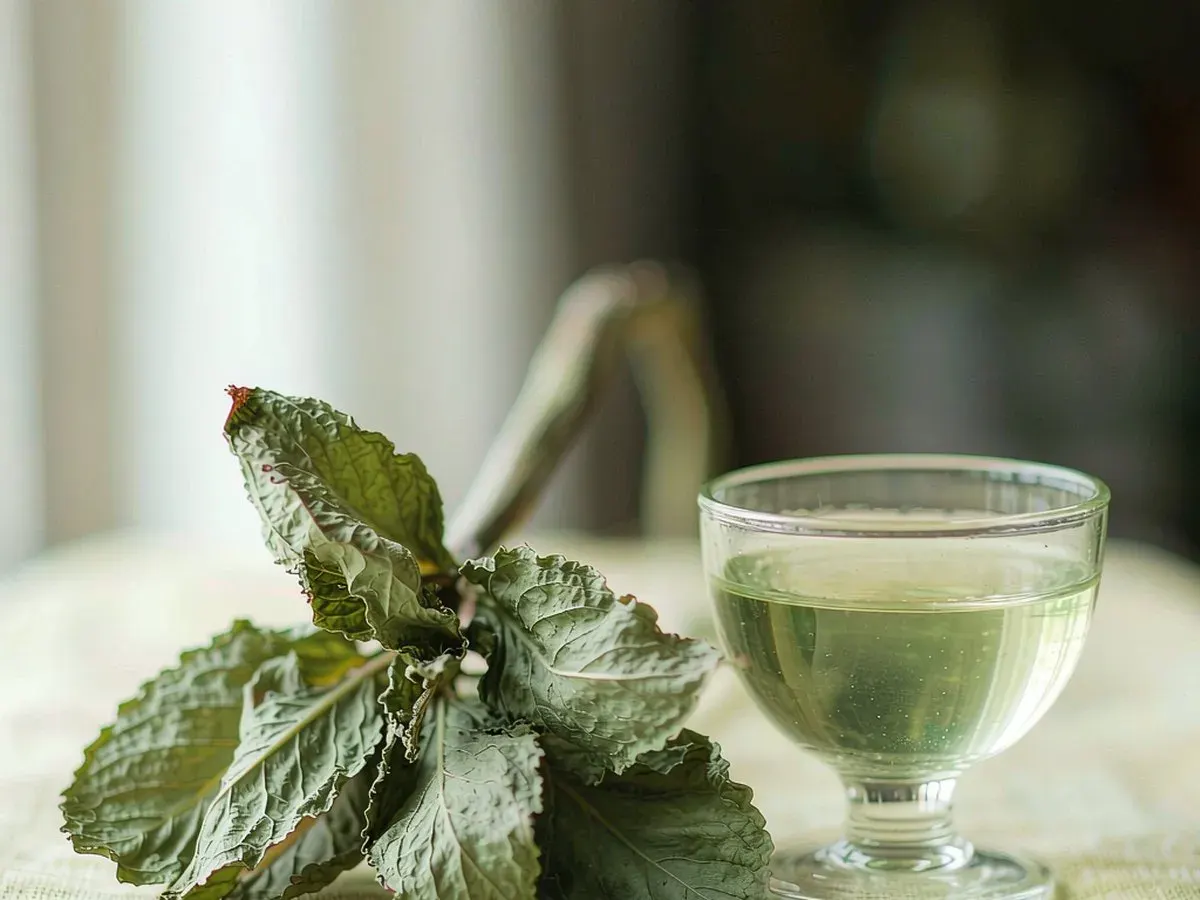
Mint is the one herb nobody needs to be introduced to, and it is also the one where a surprising amount is quietly confused. Peppermint and spearmint are different plants with different chemistry, different traditional uses and different jobs in a kitchen, and the reason spearmint exists at all is one of the nicer stories in botany.
- Botanical
- Mentha × piperita — peppermint, a sterile hybrid of watermint and spearmint. Mentha spicata — spearmint. Mentha × piperita is not a wild species; it has to be propagated vegetatively, which is why every peppermint plant in the world is a clone.
- Part used
- The dried leaf. Peppermint is usually sold in whole, crinkly, dark leaves; spearmint in flatter, brighter, more pointed ones.
- Origin
- Watermint comes from Europe and Asia; peppermint was first recorded in England in the late seventeenth century. It is now grown worldwide, with the US, India and Egypt the largest producers.
- Flavour
- Peppermint: sharp, cold, high menthol, with a clean finish. Spearmint: sweeter, softer, warmer, with almost no menthol and a hint of spearmint’s characteristic carvone.
- Use
- 2–3 g per 200 ml, 90 °C, 3 minutes, covered. Peppermint tea is a digestif; spearmint is a tea in its own right.
- Keeps
- 12 months sealed and dark. Dried mint loses its volatile oil fast, and a bag that has been open for a year is dust.
Why spearmint exists
In the Middle Ages, mint was grown in monastery gardens and its name — mentha from the Latin mentha, itself from Greek minthe — referred to the water mint, Mentha aquatica. Spearmint was the garden mint, valued for its aroma rather than for its oil, and it was the one used in cooking.
Then, somewhere around the seventeenth century, a hybrid appeared in the English countryside: a cross between watermint and spearmint, with the high menthol content of the water mint and the aroma of the spearmint. It was sharper, stronger, and better suited to medicinal use, and it became peppermint.
The hybrid is sterile and cannot produce viable seed, so every peppermint plant in the world is a cutting of every other peppermint plant in the world. That is why a named variety like Black Mitcham or a specific estate’s crop is a meaningful thing to buy: they are genuinely genetically identical clones.
The two, and how to use each
Peppermint is the medicinal one. Its menthol content is high, its cooling sensation is strong, and it is the species in the European Pharmacopoeia and in the German Commission E monographs. It is drunk after meals, and it is the one that settles an unsettled stomach.
Spearmint is the culinary one. Its active oil is carvone rather than menthol, it has a sweeter, rounder, more aromatic flavour, and it is the mint for lamb, for new potatoes, for peas, for tabbouleh and for mint tea in the Middle East. It is also the one that keeps its flavour in cooking, where peppermint would turn bitter and medicinal.
The practical distinction for a tea shelf: if you want a tea that helps you digest, buy peppermint. If you want a mint that tastes good, buy spearmint. They are not substitutes and the difference is obvious the moment you smell them.
Drying mint, and the mistake everyone makes
Dried mint is genuinely disappointing if it has been dried badly, and the reason is the volatile oil. Mint oil is what you are buying, and heat drives it off. Mint dried in a hot oven loses most of its character, and the leaves come out grey and papery with almost no smell.
Good dried mint should be dark green to grey-green, still recognisably leaf-shaped, and should smell of mint the moment you open the jar. A bag that smells of hay and looks like grey dust has been over-dried, and no amount of hot water will fix it.
It also goes stale quicker than most herbs because the oil continues to evaporate from the surface. Buy a bag you will finish in a season, keep it sealed, and keep it out of the light.
What it is used for
- Digestion The best-established use of peppermint: a carminative and antispasmodic, used for gas, bloating and intestinal cramping, and drunk after meals for exactly that.
- Irritable bowel syndrome Enteric-coated peppermint oil capsules have been used in several countries as a licensed treatment for IBS, and are among the better-evidenced herbal products in existence. That is the oil capsule, not the tea.
- Headache and cooling sensation Menthol produces a genuine cooling sensation by activating cold receptors, which is the mechanism behind the roller and the topical oil for headache.
- Antimicrobial activity Mint oils show broad antibacterial and antifungal activity in laboratory studies.
- Fresh breath A long-standing use of the oil in mouthwash and toothpaste.
- Culinary aroma The real reason most people buy it: spearmint for lamb and salads, peppermint for chocolate, ice cream and tea.
In the kitchen
- After-dinner peppermint tea Two grams of peppermint, covered, three minutes. The digestif version.
- Lamb and peas Spearmint, chopped and added at the very end of a braise. Never peppermint — it turns the dish bitter.
- New potatoes Spearmint butter melted over new potatoes with peas.
- Tabbouleh and salad Spearmint, a great deal of it, with parsley and bulgur.
- Chocolate and ice cream Peppermint extract or finely chopped fresh peppermint, both classic.
- Mint and pea soup A handful of spearmint at the end, blended in.
Peppermint oil relaxes smooth muscle, which is why it is contraindicated in people with a reflux condition and why enteric-coated capsules are used for IBS. A cup of peppermint tea can aggravate heartburn in some people, and that is a real and common experience.
I
t
i
s
t
r
a
d
i
t
i
o
n
a
l
l
y
a
v
o
i
d
e
d
d
u
r
i
n
g
p
r
e
g
n
a
n
c
y
,
a
n
d
a
n
y
o
n
e
w
i
t
h
g
a
l
l
b
l
a
d
d
e
r
d
i
s
e
a
s
e
s
h
o
u
l
d
a
v
o
i
d
i
t
,
s
i
n
c
e
p
e
p
p
e
r
m
i
n
t
c
a
n
s
t
i
m
u
l
a
t
e
t
h
e
g
a
l
l
b
l
a
d
d
e
r
.
A
n
y
o
n
e
w
i
t
h
r
e
f
l
u
x
s
h
o
u
l
d
k
n
o
w
b
e
f
o
r
e
t
h
e
y
s
t
a
r
t
.
Disclaimer
Peppermint oil capsules are a licensed treatment for irritable bowel syndrome in several countries and are genuinely well evidenced. Peppermint tea is a pleasant digestive drink and is not a treatment for IBS or for any other condition, and no herb should replace prescribed care.