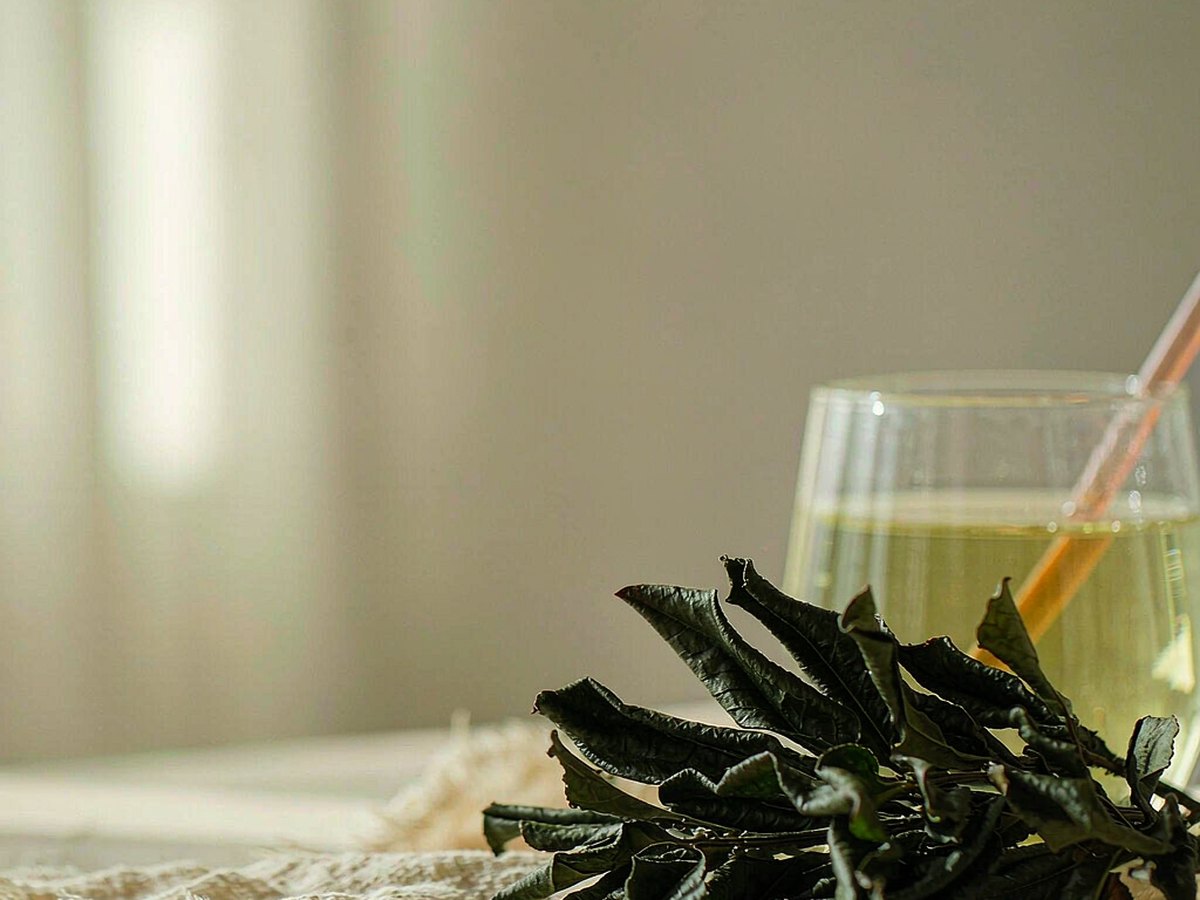
Kuding tea is the free pot of bitter tea that arrives at the end of a Chinese restaurant meal, and most people drink a sip of it, wince, and leave it. It is made from the leaves of a holly, it is astonishingly bitter, and it is one of the most thoroughly misunderstood teas in the world — including, in its own country, where there is a genuine and continuing argument about what it is.
- Botanical
- Ilex latifolia or Ilex kaushue — a holly, of the family Aquifoliaceae. Not tea at all, and not related to the tea plant. The brewed drink is green in appearance and bitter beyond measure.
- Part used
- The dried leaf, usually twisted into a dark rope. It comes in pressed brick or twisted-stick form.
- Origin
- Historically Hunan, Hubei and Sichuan; also Yunnan and Guangxi. Production has moved around, and the name is used loosely across several species.
- Flavour
- Intensely bitter, with a green, astringent, almost smoky edge and a cooling finish. There is no sweetness at all and no fragrance.
- Use
- 3–5 g per 200 ml, 90–95 °C, 1 minute for the first steep. It takes many short steeps rather than one long one.
- Keeps
- 18 months sealed and dark. The pressed form keeps for years.
Why so bitter
The bitterness comes from a class of compounds called triterpenoid saponins, and they are present in a concentration that is genuinely remarkable — kuding is one of the most bitter plant materials in existence, and it puts a good cup of hops or gentian to shame.
In traditional Chinese practice it is classified as bitter and cold, and it is used for what is called fire and heat in the upper burner — the picture of a red, sore throat, a feeling of heat rising, a headache with heat, and a bitter taste in the mouth. It is a cooling herb in the strongest sense, and the bitterness is the mechanism, not a side effect.
There is a parallel with the very best tea in the world. The bitterness and astringency in a good longjing or a good darjeeling come from the same kind of interaction with saliva — the tannins and catechins bind to the proteins in saliva and produce the sensation of sweetness and mouthfulness alongside the bitterness. Kuding does something similar, which is why a properly brewed cup has a clean, lingering finish rather than just pain.
The argument about what kuding is
This is a genuinely interesting piece of Chinese food politics. For most of the twentieth century, kuding was a staple tea in Hunan and Sichuan, served in teapots in restaurants and drunk with meals, and it was also the base of the famous dark green “kuding” pressed tea that was exported to Tibet and to East Asia.
Then a lot of what was sold as kuding turned out not to be kuding at all. A characteristic processing method — roughly a dozen fixed high-temperature stages, including a fermentation step that produces the distinctive dark colour and the very heavy body — turned out to be far more effective when applied to a cheap holly or a different plant entirely. The result was a bitter, dark, strongly fermented tea that was sold as kuding at a fraction of the price.
The genuine article, from Ilex latifolia, is a green, lightly oxidised leaf with a clean bitterness and a clear green liquor. The heavily fermented version is a different drink with a different flavour, and most of the world’s kuding supply is now the latter. This is worth knowing when you buy it, because a bag labelled kuding can be either.
How to drink it
It is not drunk like a normal tea and pretending otherwise is how people end up hating it. A good pot is made with a large amount of leaf and very hot water, and it is drunk quickly and repeatedly.
The method that works is short steeps. One gram in a small pot, ninety-five degree water, sixty seconds, and drink it — then add another gram and steep for another minute. The first steep is the strongest and the tenth is the mildest, and the point is to walk down that scale slowly rather than to suffer through the first cup.
It is drunk after a heavy, oily or spicy meal in a Chinese restaurant, and the cultural logic is exactly what you would expect: a bitter, cooling, astringent drink after rich food. It is also drunk in summer, as a cooling tea.
What it is used for
- Clearing heat The principal classical use: for the picture of heat in the upper body — a red sore throat, a hot feeling rising, a bitter taste in the mouth.
- Bitter cooling tea Classified as cold, and drunk as a cooling drink in summer and after heavy meals.
- Saponin bitterness The triterpenoid saponins are responsible for both the bitterness and the pharmacological interest.
- Blood pressure research Kuding has been studied for effects on blood pressure and on lipids, with some clinical work in hypertensive patients. It interacts with blood-pressure medication.
- Astringency and mouthfeel The tannins bind to salivary proteins and produce the clean, mouth-filling finish that makes a bitter tea drinkable.
- Traditional restaurant tea Served free at the end of a Chinese meal for exactly the reason you would guess.
In the kitchen
- The restaurant method A small pot, a lot of leaf, very hot water, and a series of sixty-second steepings.
- As a digestif After a rich or spicy meal, drunk hot in small cups.
- Cold and iced Brewed strong, then served over ice with a little honey — the only way to make it approachable for most people.
- Blended with chrysanthemum A pinch of chrysanthemum softens the bitterness and adds a floral note.
- In a pot of oolong A little kuding in a pot of roasted oolong adds body and a cooling finish.
Kuding is cold and intensely bitter, and traditional sources advise against it in people with a cold, deficient constitution, with a weak stomach, or with loose stools. It is not something to drink in large amounts on an empty stomach.
I
t
h
a
s
b
e
e
n
s
t
u
d
i
e
d
f
o
r
b
l
o
o
d
–
p
r
e
s
s
u
r
e
a
n
d
l
i
p
i
d
e
f
f
e
c
t
s
a
n
d
i
t
i
n
t
e
r
a
c
t
s
w
i
t
h
b
l
o
o
d
–
p
r
e
s
s
u
r
e
m
e
d
i
c
a
t
i
o
n
a
n
d
w
i
t
h
s
o
m
e
o
t
h
e
r
d
r
u
g
s
.
A
n
y
o
n
e
o
n
m
e
d
i
c
a
t
i
o
n
,
o
r
w
i
t
h
a
s
t
o
m
a
c
h
u
l
c
e
r
,
s
h
o
u
l
d
a
s
k
a
p
h
a
r
m
a
c
i
s
t
b
e
f
o
r
e
d
r
i
n
k
i
n
g
i
t
r
e
g
u
l
a
r
l
y
.
Disclaimer
Kuding is one of the genuinely interesting teas because its bitterness is a measured effect rather than a marketing claim, and because the argument about what counts as the real thing is a real one. It is a traditional medicine and a cooling drink, not a treatment for high blood pressure or anything else, and no herb should be used in place of prescribed care.