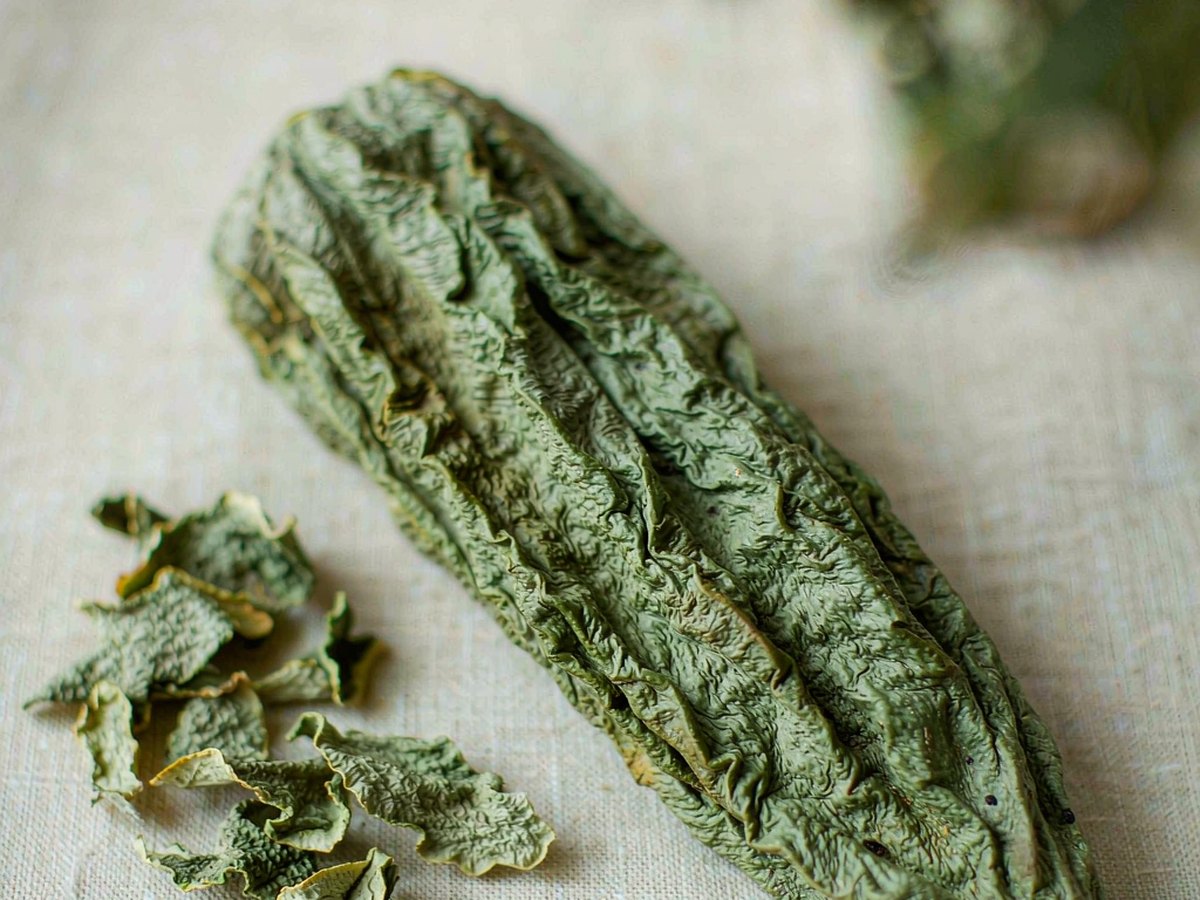
Buddha’s hand is a citron with the fingers separated, no juice, and an extraordinary concentration of aromatic oil in the peel. In Chinese tradition it is one of the three citrus gifts — with kumquat and longan — given at the new year, and in the pharmacy it is a qi-moving aromatic for a feeling of pressure and fullness.
- Botanical
- Citrus medica var. sarcodactylis — the fingered citron, botanically the same species as the ordinary citron, differing only in the divided fruit.
- Part used
- The dried whole fruit, or the dried peel cut into strips. There is no pulp and no juice to speak of.
- Origin
- Guangdong, Guangxi, Sichuan and Yunnan in China; also Italy and Spain, where it is grown for the perfume trade.
- Flavour
- Intensely perfumed — lemon, lime, mandarin and a floral top note, with almost no acidity because there is no juice.
- Use
- 1–2 g of peel per 200 ml, simmered 10 minutes. A whole dried finger in a pot of tea gives a clean, lifted citrus note.
- Keeps
- 18–24 months sealed. The thick peel protects the oil, and a properly dried Buddha’s hand still smells strongly after a year.
A citrus that gave up on fruit
The fingers are a genetic oddity that horticulturalists have selected for over centuries: the fruit of Citrus medica var. sarcodactylis does not develop segments or pulp at all, only a divided rind full of oil glands. There is nothing to eat inside it and no juice to squeeze, which is why it survives as an ornamental and aromatic fruit rather than as food.
The name comes from the shape, and the shape is the source of the Chinese gift tradition. Buddha’s hand, kumquat and longan together make up the san he, the three blessings, presented at the new year for good fortune, and a dried Buddha’s hand on a table is both a fragrance and a symbol.
The practical point for anyone buying it is that a dried whole Buddha’s hand is mostly a decorative and aromatic object. If you want it in a cup, buy the peel, or break a piece off the whole fruit and simmer it.
Fo Shou Gan in the pharmacy
In Chinese medicine the Buddha’s hand is a qi-moving and digestive aromatic, used for distension and pressure in the abdomen, for nausea, and for the sensation of something being stuck. It sits in the same family as citron and aged tangerine peel but is gentler than green tangerine peel and less slow than aged peel.
Its reputation also extends beyond the digestive system. It is traditionally used for what classical sources call liver qi stagnation — the combination of a stuffy chest, irritability and a feeling of tension in the flanks — which in modern terms describes a pattern rather than a diagnosis.
The sweet, clean aroma is part of why it appears in so many domestic preparations. It scents a room, it perfumes a tea, and it makes a mediocre herbal blend taste better.
Buying and storing
A dried Buddha’s hand should be firm, evenly coloured in pale yellow to tan, and should smell sharply of lemon when you pick it up. The individual fingers should be intact and not shrivelled to nothing.
A soft, dark, flexible fruit is old. The oils go first and the pith takes on moisture, which is where mould starts. This fruit stores for a long time, but only if it was dried properly in the first place.
The thick white pith underneath the coloured skin is bitter and slightly soap-like. In tea, use the coloured skin only, and cut it thin. A piece of the white pith will dominate the pot with a bitterness that has nothing to do with the fragrance.
What it is used for
- Qi movement and digestion Traditionally used for fullness, distension, pressure and nausea, and for the sensation of something stuck in the abdomen.
- Liver qi stagnation A classical use for the combination of chest stuffiness, tension and irritability — a traditional pattern, not a diagnosis.
- Aromatic fragrance A very high oil content used to scent rooms, closets and tea, and to lift the aroma of a blend.
- Nausea A gentle antiemetic aromatic, traditionally used for travel and for the queasy feeling after rich food.
- New year gifting One of the three citrus gifts of the Chinese new year, alongside kumquat and longan.
- Culinary fragrance The peel is candied and used in syrups and preserves.
In the kitchen
- Fo shou gan tea One strip of the coloured peel simmered ten minutes, or added to a pot of white tea.
- Digestive blend With aged tangerine peel and Sha Ren, taken after a heavy meal.
- Candied peel Thin strips of the coloured skin, simmered in syrup until translucent.
- Room fragrance A whole dried fruit in a bowl in the hallway, or a piece in a drawer.
- New year display A dried Buddha’s hand in a shallow dish with kumquat and dried longan, as a centrepiece.
Use the coloured skin, not the white pith — the pith is bitter and can make a cup unpleasant. A dried fruit that feels soft or damp is old and should not be used.
F
o
S
h
o
u
G
a
n
i
s
a
w
a
r
m
,
m
o
v
i
n
g
a
r
o
m
a
t
i
c
a
n
d
t
r
a
d
i
t
i
o
n
a
l
s
o
u
r
c
e
s
a
d
v
i
s
e
c
a
u
t
i
o
n
d
u
r
i
n
g
p
r
e
g
n
a
n
c
y
a
n
d
i
n
p
e
o
p
l
e
w
i
t
h
a
s
e
n
s
i
t
i
v
e
g
u
t
.
A
n
y
o
n
e
o
n
m
e
d
i
c
a
t
i
o
n
s
h
o
u
l
d
a
s
k
a
c
l
i
n
i
c
i
a
n
b
e
f
o
r
e
u
s
i
n
g
i
t
r
e
g
u
l
a
r
l
y
,
a
n
d
i
t
s
h
o
u
l
d
b
e
k
e
p
t
o
u
t
o
f
r
e
a
c
h
o
f
c
h
i
l
d
r
e
n
.
Disclaimer
This article describes a fragrant edible citrus and its traditional use in Chinese culture and medicine. Traditional indications are not established clinical treatments. Do not use Buddha’s hand to treat any condition, and consult a qualified practitioner before using it medicinally.